

Welcome
Educators play a powerful role in shaping not only academic success, but emotional safety and resilience in students.
I created these resources to support teachers, counselors, school staff, and administrators who are navigating increasingly complex emotional needs in children and adolescents. Whether you are supporting a student experiencing anxiety, emotional outbursts, withdrawal, or simply big feelings they don’t yet know how to name—these tools are designed to be practical, respectful, and easy to use within real classroom settings.
As a registered nurse with a background in pediatric and adolescent mental health, and the author of Emotional Roller Coaster, my goal is to help schools foster emotionally supportive environments without placing additional strain on already full plates. These resources are rooted in compassion, emotional literacy, and trauma-informed care.
You do not need to be a mental health professional to make a meaningful impact. Sometimes, providing language, space, and understanding is enough to help a student feel seen.
Trauma informed teaching tips
Trauma-informed teaching is not about diagnosing or fixing students—it is about creating environments where students feel safe, respected, and supported.
Key trauma-informed practices include:
- Assume behavior is communication. Emotional outbursts, withdrawal, or defiance often reflect unmet emotional needs rather than intentional disruption.
- Offer choice whenever possible. Allowing students to choose how they participate can restore a sense of control and safety.
- Normalize emotional experiences. Let students know that anxiety, frustration, and sadness are human emotions, not personal failures.
- Use calm, consistent language. A steady tone and predictable responses help regulate nervous systems.
- Focus on connection before correction. Students are more receptive to guidance once they feel understood.
- Create predictable routines. Consistency builds emotional safety, especially for students with trauma histories.
- Avoid public discipline when possible. Private conversations preserve dignity and reduce emotional escalation.
Small shifts in language, posture, and response can significantly reduce emotional distress and improve classroom engagement.
Resources
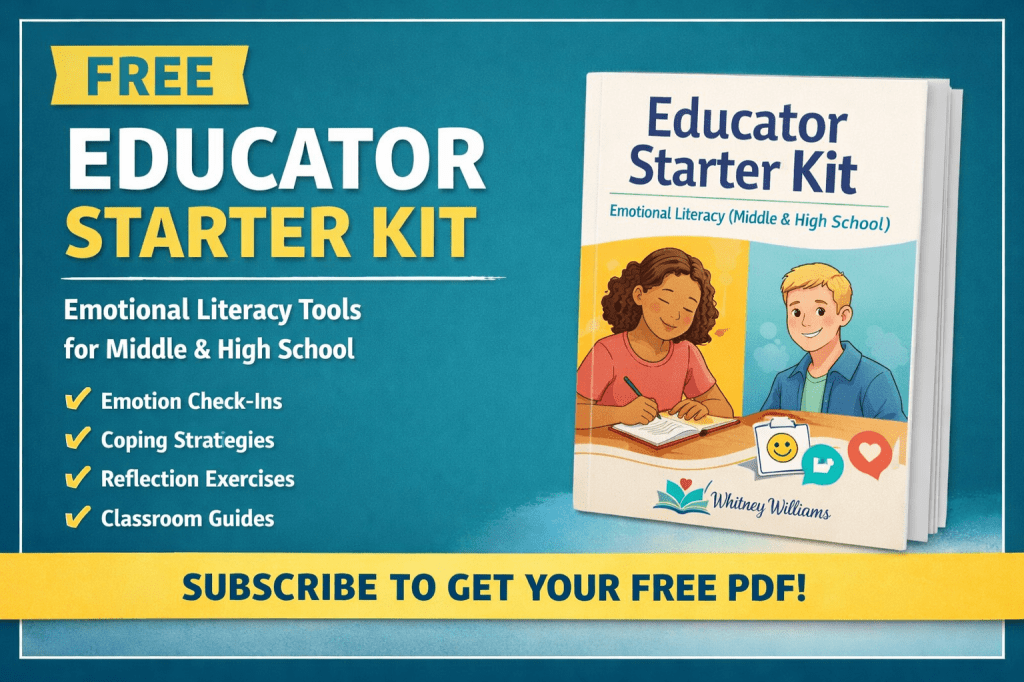
Free Educator starter kit
The Educator Starter Kit is designed to provide classroom-ready tools that can be used during advisory periods, small groups, counseling sessions, or brief emotional check-ins throughout the school day.
The starter kit includes:
- Emotion check-in sheets for daily or weekly use
- Student-friendly emotional vocabulary tools
- Reflection and journaling prompts appropriate for middle and high school students
- Simple coping strategies for anxiety, anger, and emotional overwhelm
- Conversation starters to support healthy emotional expression
- Guidance for using Emotional Roller Coaster in classroom or group settings
These resources are intentionally flexible and can be adapted to fit a variety of grade levels, learning environments, and student needs.
Download the free Educator Starter Kit to begin supporting emotional awareness and regulation in your classroom.
Subscribe
Subscribe to get our the latest stories in your inbox.

Reviews
“Practical and easy to use.”
“This starter kit is thoughtfully designed and truly classroom-ready. The check-ins and reflection tools are simple, respectful of student privacy, and easy to integrate into advisory or homeroom without taking away from instruction. A great resource for supporting emotional awareness in middle and high school students.”
— Middle School Teacher
“Supportive without being overwhelming.”
“These tools strike the right balance between structure and flexibility. Students feel supported without feeling pressured to share, and educators are given clear guidance on how to use the resources responsibly. I would recommend this to any school looking to strengthen emotional check-ins.”
— School Counselor
“Exactly what educators need.”
“I appreciate how flexible and non-clinical these tools are. The examples provided make implementation feel approachable, even for teachers who don’t have formal SEL training. This is a resource I can see being used consistently, not just once.”
— High School Educator
“Well written and district-friendly.”
“The language, structure, and disclaimers are exactly what administrators look for when reviewing SEL materials. The kit supports emotional literacy without overstepping professional boundaries. It’s clear, thoughtful, and appropriate for a wide range of school settings.”
— School Administrator


